Date:
November 15, 2026
Author:
/
Summary and contents
When a beneficiary dies before you, the result depends on the asset, the document that controls it, and the law that applies. An eligible backup might receive the gift, surviving beneficiaries might share it, or a substitute gift might go to descendants. The deceased beneficiary’s family does not automatically inherit from every account, will, or trust.
- Start by identifying which document controls the asset
- Account or policy: find out what happens to the missing share
- Will: read the gift, the backup, and the rest of the will
- Trust: check when the beneficiary needed to survive
- Update the instructions and verify the change
- Comparison at a glance
- Visual guide
- Related video
- Frequently asked questions
- Do a deceased beneficiary’s children automatically inherit in Colorado?
- Does naming a contingent beneficiary solve every missing-share problem?
- What if a beneficiary dies after the owner but before payment?
- Sources and next steps
A beneficiary’s death can leave an old name on a retirement account, a gift in a will, and a share in a trust. Even if all three documents name the same person, they may send the property to different places. An update starts by finding the document that controls each asset.
Start by identifying which document controls the asset
Find the signed will, the current trust and its amendments, and the most recent beneficiary confirmation from each institution. An account statement may show whether an account is in your name, but it may not show the actual beneficiary terms in effect. Request a copy if you cannot find one.
Make one row for each asset or gift. Record the owner, the document that controls the transfer, the person who died, the existing backup, and the outcome you now want. The same beneficiary’s name can appear in several places, and a change on one form does not update the others. See our guide to primary and contingent beneficiaries for how the two tiers usually work.
Account or policy: find out what happens to the missing share
If a life insurance policy or retirement account names two primary beneficiaries, the death of one does not necessarily send that person’s share to the contingent beneficiary. The policy or plan can have a specific rule for the missing share. Ask what happens if one primary beneficiary dies and what happens if none survive; they are different questions.
Ask whether the form permits descendants to take a deceased beneficiary’s share and how the institution defines that choice. If there is no surviving beneficiary entitled to receive the asset, ask for the written default rule. Do not assume the estate is the default for every account.
Colorado’s substitute-gift statute for certain nonprobate transfers, C.R.S. § 15-11-706, expressly excludes insurance and annuity policies, retirement and similar plans, beneficiary deeds, and certain vehicle transfers. Other asset-specific statutes may also matter. The IRS retirement beneficiary guidance explains that designations follow plan procedures and that some plans give particular beneficiaries, such as spouses, special rights.
Will: read the gift, the backup, and the rest of the will
Colorado’s will anti-lapse statute can preserve certain gifts when a named beneficiary dies first. Under C.R.S. § 15-11-603, a gift to your child or sibling, for example, may pass instead to that person’s surviving descendants. The family relationship and wording matter, including whether a qualified alternate recipient is named and entitled to take. Ordinary words about surviving you do not necessarily displace the statute.
If a gift fails and does not pass to a substitute, § 15-11-604 generally sends a failed gift outside the residue into the residue. The residue is what remains after specific gifts and other obligations are accounted for. A failed share of the residue can have a different result, so read the entire will. Do not assume a gift to a friend will pass to that friend’s children under the same rules.
Trust: check when the beneficiary needed to survive
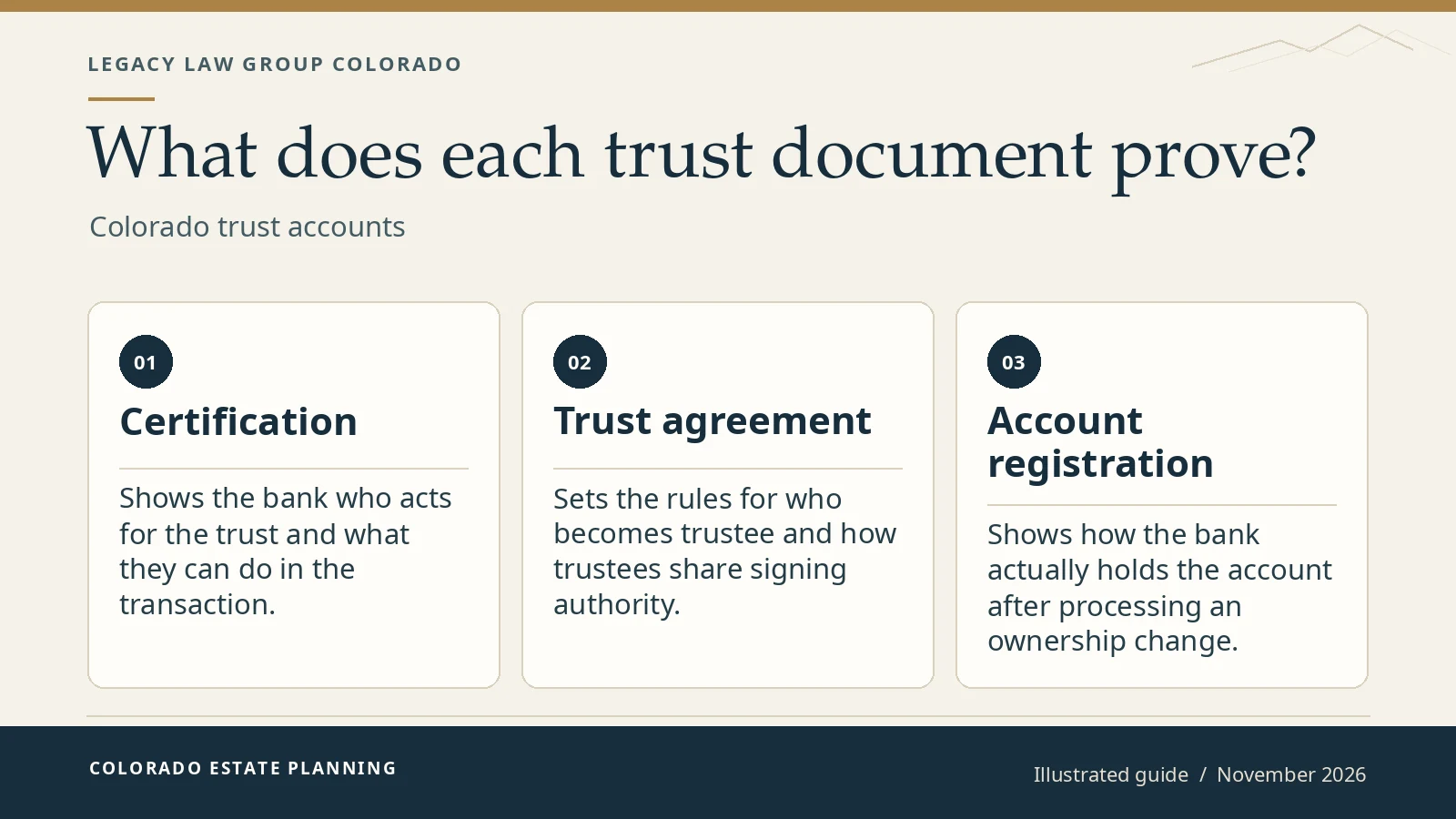
Read the trust’s distribution clause and any definitions for descendants or family branches. It might say what happens at your death, at the death of a surviving spouse, or when another event occurs. Colorado’s § 15-11-707 addresses survival and potential substitute takers for future interests in a trust. For those interests, the relevant date can differ from the date the person who created the trust died.
For example, suppose a trust calls for the remainder to pass after a surviving spouse dies. A beneficiary who survives the first spouse but dies before the surviving spouse can raise a different question from someone who had already become entitled to a payment but died before the check was issued. Ask the lawyer reviewing the trust to explain which event controls, whether a share had already vested under the terms, and whether the deceased person’s descendants or another recipient could take.
Update the instructions and verify the change
- Decide where the share should go. Do you want a deceased child’s share to stay with that child’s descendants, go to other beneficiaries, or go to a different person or charity?
- Review the next recipient’s situation. A minor or a person receiving means-tested benefits may need a different arrangement from a direct designation.
- Update the right documents. Use the institution’s form for an account or policy. Have counsel review changes to the will or trust and confirm how to execute them.
- Check what was accepted. Save the institution’s updated confirmation and the signed estate documents. Verify names, shares, and backups, particularly after a rollover or new account opening.
Our Colorado estate plan update guide covers other changes a death can trigger. To review the affected gifts and beneficiary forms together, contact Legacy Law Group Colorado.
Comparison at a glance
| Where is the gift named? | Start with | Ask this question |
|---|---|---|
| Life insurance or retirement account | Accepted form and policy or plan terms | If one primary dies, who takes that share under this particular contract? |
| Colorado will | Specific gift, alternate gift, and residuary clause | Does anti-lapse apply, and does an express alternate take instead? |
| Trust | Trust and all amendments | What is the distribution event and who can take if the beneficiary dies first? |
| Bank or brokerage beneficiary registration | Account title, beneficiary terms, and applicable state rules | Which survivorship or fallback rule applies to this type of account? |
Visual guide

Related video
This related Legacy Law Group Colorado video provides background. Use the written guide for the specific procedures and rules discussed here.
Watch on YouTube: Could Your IRA Completely Bypass Your Will or Trust?.
Frequently asked questions
Do a deceased beneficiary’s children automatically inherit in Colorado?
No. They may take under certain plan terms or applicable substitute-gift rules. Start with the asset, governing document, and family relationship before drawing a conclusion.
Does naming a contingent beneficiary solve every missing-share problem?
No. If another primary beneficiary survives, the account or policy may handle the deceased primary’s share without using the contingent tier. Ask the institution for its rule in writing.
What if a beneficiary dies after the owner but before payment?
That is a different question from dying before the owner. Check any survival period, distribution event, and terms that determine whether the person had already become entitled to receive the asset.
Sources and next steps
- Colorado Revised Statutes 2026, Title 15: §§ 15-11-603, 604, 706, 707 and 15-15-212
- IRS: retirement plan and IRA beneficiaries
Sources checked November 15, 2026. This article provides general information about Colorado planning. The details of your documents and circumstances matter.
For help reviewing your estate plan, contact Legacy Law Group Colorado.